

PLATFORMS / BUILDING OPERATIONS

Enterprise

Homira Enterprise brings a building-scale operational perspective to connected systems. Energy consumption, solar generation and system flows become visible in one software environment.

Concept artwork · Tecco
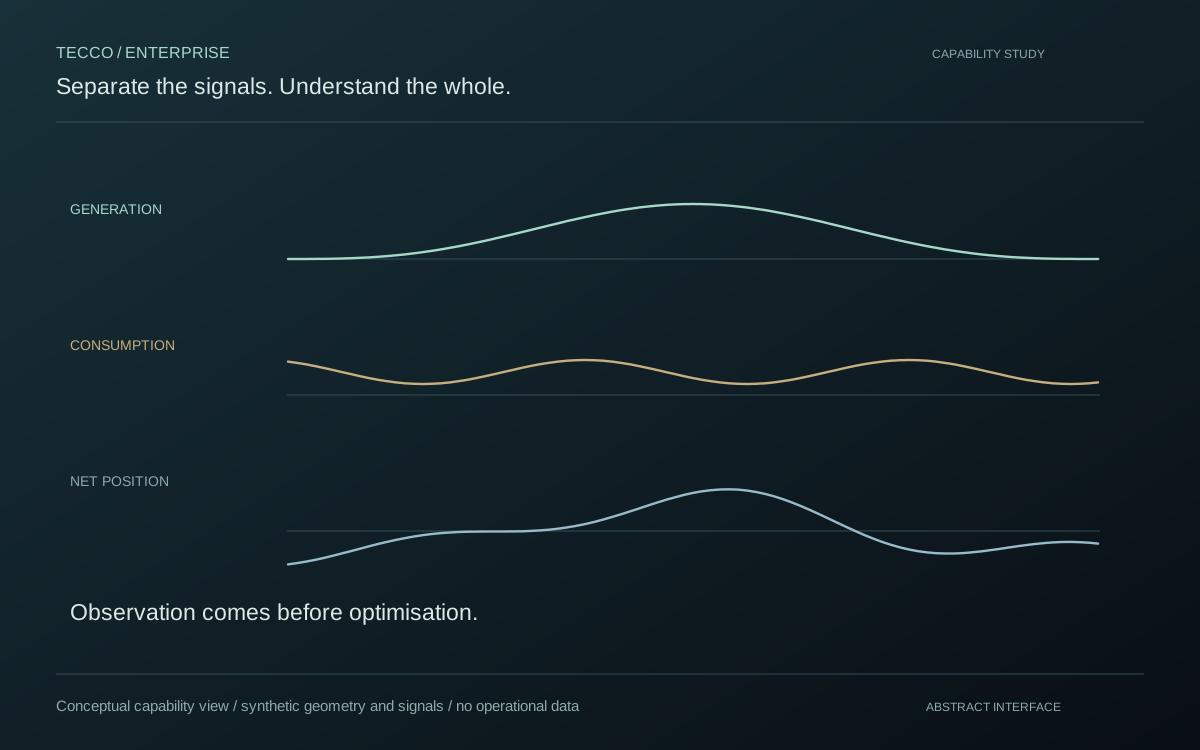
Abstract Enterprise capability study: separate generation, consumption and net signals
Observation model · generation, consumption and net position · conceptual diagram
CAPABILITY STUDIES

Understand the principle.
See what becomes possible.

Purpose-built abstract views explain each capability. These are conceptual representations, not production interfaces or operational data.

A quiet net position can conceal active flows. Conceptual artwork for Read the building’s energy position.
A quiet net position can conceal active flows.
01 / FEATURE EXPLORATION

Read the building’s energy position.

Consumption and solar generation appear together without losing their separate meanings. A building operator can begin with the selected reporting period and then investigate the underlying measurements.

The conceptual signals deliberately omit operational values. They explain why generation, demand and net position must retain their separate meanings.

Generated conceptual artwork · not a product interface

The timing changes the picture. Conceptual artwork for Follow the shape of demand.
The timing changes the picture.
02 / FEATURE EXPLORATION

Follow the shape of demand.

Time-series comparisons show when demand and generation occur; a flow view puts the distribution of energy into a building-wide context.

Timing matters as much as totals. These views support investigation before attributing a change to a particular device, operating strategy or energy intervention.

Generated conceptual artwork · not a product interface
Recognise the deviation within the rhythm. Conceptual artwork for Investigate how systems are used.
Recognise the deviation within the rhythm.
03 / FEATURE EXPLORATION

Investigate how systems are used.

Usage insight arranges observed activity over time, making recurrent patterns and unusual periods easier to compare across connected systems.

Reference curves support interpretation. They should be read alongside source meters, device state and site knowledge rather than treated as proof of autonomous optimisation.

Generated conceptual artwork · not a product interface
SYSTEMS / IN DETAIL

Operational visibility starts with measurement.

The building interface brings consumption, solar generation and system flows into view. Behind that interface, measurements must retain their physical meaning before summaries, attribution or optimisation are introduced.

ENGINEERING / FOLLOW THE FLOW
CONCEPTUAL MECHANISM 01 / 04
BoundaryResponsibilityEngineering consideration
ConsumptionA measured load over timeRetain the source, sampling context and units.
GenerationSolar contributionKeep generation separate from demand before deriving a balance.
AttributionAn interpretation of the measurementsDistinguish metered evidence from estimated device-level contributions.

Where does operation meet research?

Homira Enterprise provides a building-scale view of energy and connected systems. Forecasting, attribution and future dispatch remain separate research directions with their own evaluation requirements.

HOW ENTERPRISE FITS
01

See beyond the individual device

A building-scale interface puts energy consumption, solar generation and connected-system flows into a shared operational perspective.

02

Preserve the measurement

Metered consumption, generation and storage channels should remain distinguishable before derived attribution is added. Observability provides the basis for understanding a building’s behaviour.

03

Connect the model to operation

Homira Enterprise brings energy and connected-system observations into a building-wide operational perspective. Predictive dispatch and broader energy research are separate directions; the abstract visuals on this page explain capabilities without exposing operational interfaces.

Inside the workbench

Other platforms

All platforms